‘Cease’ and ‘seize’

I spotted this for the first time only recently.

There seems to be particular confusion over phrases such as ‘never ceases to amaze me’ or ‘seize the moment’. ‘Cease the moment’ is wrong, and here is why:

Ceasehttp://mrg.bz/IEy9hC
  • To bring or come to an end

Seize

  • To take hold of forcibly, suddenly or quickly; to grab
  • To take by force or capture
  • To take possession (of something) by warrant or legal right
  • To take immediate advantage of (usually an opportunity)
  • To take (an opportunity) in an eager and decisive manner
  • To affect or fill the mind (of someone) suddenly
  • To understand (something) clearly or quickly
  • To become jammed, usually through overheating (mechanical parts). Often used as seize(d) up
  • To stop being able to work or move normally (usage is often as seize up)
Swan-upping

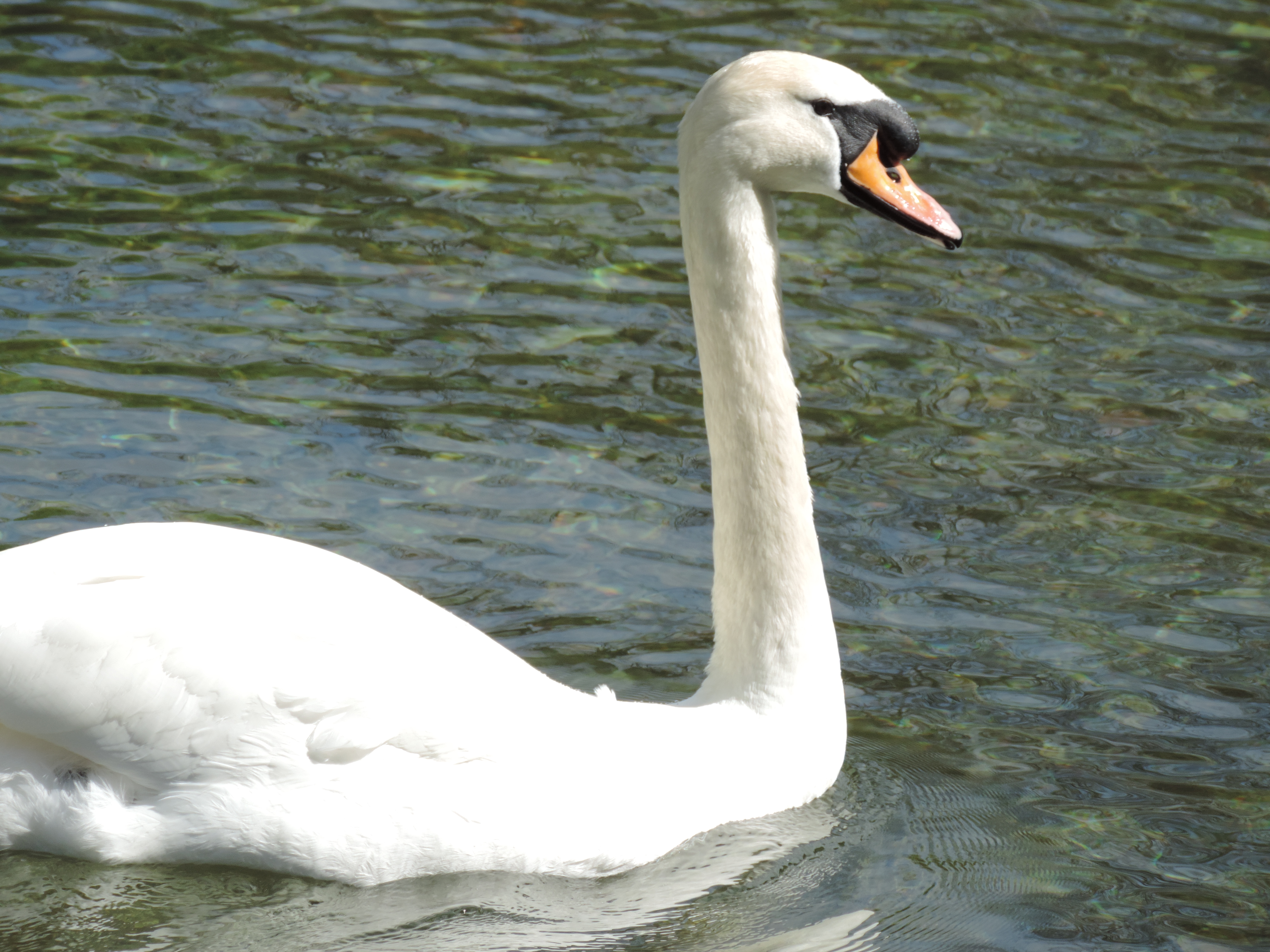
2014-04-09 10.42.39The annual British practice of catching swans on the River Thames and its tributaries, and marking the swans to indicate ownership (by the Crown or a corporation).

The practice dates from the twelfth century when swans were an important high-status food. The Crown still retains rights over unmarked mute swans in open water, but the swans are no longer eaten.

Modern swan-upping takes place primarily as part of conservation efforts, and education is now a key part of the undertaking.

The hyphen is recommend by the New Oxford Spelling Dictionary and other older dictionaries, but many modern uses are not hyphenated.

More details on modern swan-upping can be found here and here.

‘Insure’ and ‘ensure’

These words have overlapping meanings to do with certainty and security.

http://mrg.bz/onYdFqInsure:

  • To guarantee or protect (usually against risk, damage or loss) in a financial sense
  • To take out or issue an insurance policy

Ensure:

  • To make certain
  • To make safe or protect

In American English, insure is used instead of ensure. It is much less common to see this in British English (and probably to be avoided).

‘Flare’ or ‘flair’?

Flare and flair are homophones, and homophones are often confused. Flare tends to be used when the word should be flair. I think this is because we are more used to seeing and using flare (it has a wider range of uses).

Flair

  • A natural talent, aptitude or ability.
  • Stylishness (usually distinctive) or originality.

Flare

  • A device that produces a sudden blaze of light.
  • A blaze of light used to illuminate, alert, or signal distress or location.
  • A part that spreads outwards from a narrow to wider shape.
  • Flares are trousers that have a ‘flare’ at the bottom of each leg.*
  • An unsteady flame or a sudden burst of flame.
  • A sudden explosion in the chromosphere and corona of a star that results in an intense burst of radiation (astronomy).https://pixabay.com/en/lens-effect-flare-sunset-above-768692/
  • The extraneous light on film that is caused by reflections inside the camera (photography).
  • The curve of a vessel’s bow (outwards and upwards), which is designed to throw the water outward when moving.
  • To break out suddenly (temper, conflict) or a burst of intense emotion.
  • To glow with a sudden intensity (light or someone’s eyes). It can also mean ‘dilate’ or ‘widen’ in terms of nostrils.
  • An illness can flare up – a sudden occurrence or recurrence. Also used to apply to violence or temper.

*Before my time.

‘Complement’ or ‘compliment’?

This is another post written because of suggestions I have received from readers of my blog (thank you).

https://pixabay.com/en/kitchen-work-restaurant-cook-chef-731351/

My compliments to the chef.

Compliment:

  • An expression of admiration or praise.
  • Compliments are formal greetings.

Complement:

  • A person or thing that completes something.
  • An accompaniment to something that makes it perfect or brings out its good qualities.
  • A full number or complete amount of something.
  • The full amount of officers and crew needed to man a ship.
  • A word or words added to the verb to complete the meaning of the predicate in a sentence (grammar).
  • The angle added to a specified angle to produce a right angle (geometry).
  • The members of a set that are not found in a given subset (maths).
  • A group of proteins found in blood plasma and tissue fluid that combine with an antigen-antibody complex to cause the breakdown of foreign cells (physiology).

The meaning is the same when using the words as verbs. You compliment me on my dress. My shoes complement my dress.

Complimentary and complementary

The difference here is largely the same as above. However, complimentary has an additional meaning to expressing admiration or praise: it can also mean given free of charge.

Complementary means completing or forming a complement, or refers to the relationship between things that go well together.

Spelling

It may help as an aid to spelling to remember that a complement completes something and complete is spelt with an e (as well as the ‘e’ sound when pronounced).

Bag-o’-wrinkle

http://mrg.bz/WyrbkwThis word does not mean what you probably think it might mean (shame on you).*

Bag-o’-wrinkle is a variant of the nautical term baggywrinkle.

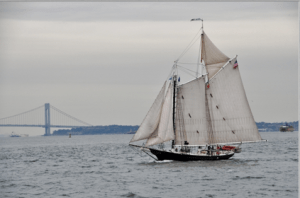
Baggywrinkle: rope yarns (usually old) wound around parts of a ship’s rigging to prevent chafing.

From the pictures I have seen, it looks like a cross between a brush and a mop head.

*Don’t look up baggywrinkle on Urban Dictionary though.

Is it an allusion?

‘Allusion’ and ‘illusion’ are often confused. ‘Elusion’ doesn’t get mixed up with them that often but sometimes it makes a surprise appearance.

https://pixabay.com/en/optical-deception-deception-graphic-813728/An allusion is usually defined as an indirect reference. However, Fowler’s states that it is acceptable to use ‘allude’ to mean ‘refer’.

An illusion is a false appearance or deceptive impression of reality. It can also be a false or misleading idea or belief.

Elusion means the act of escaping or avoiding.

Arsy-versy

Thank you to Aeryn Rudel for suggesting a new addition to my blog topics – weird hyphenated words!https://pixabay.com/en/pond-mallard-upside-down-foraging-724490/

‘Arsy-versy’ is an informal, primarily British English word. It means backwards, upside down, in reverse, confused or disordered.

I got things arsy-versy.

I probably wouldn’t use it in front of polite company.

‘Stationary’ and ‘stationery’

http://mrg.bz/QFyes2If I had a penny for every time I saw these mixed up, I would have a very heavy penny jar.

And I would get fed up of that face the cashiers at the bank pull when they see you are depositing lots of change.*

  • Stationary: not moving or motionless.
  • Stationery: writing and other office materials.

*I always sort it into the correct denominations and amounts, and put it into the little plastic bags. I don’t know why I still get the face.